Droppings in protected edges
Look along wall lines, behind appliances, inside lower cabinets, near stored food, around utility rooms, and in quiet basement or attic areas. Do not handle droppings casually or sweep them dry.
Rat & Mouse Removal, Rodent Control, Exclusion & Proofing.
“Fix” means looking beyond the rodent you saw. It means understanding where activity is happening, addressing rats or mice inside the property, and identifying openings that can let the problem start again.
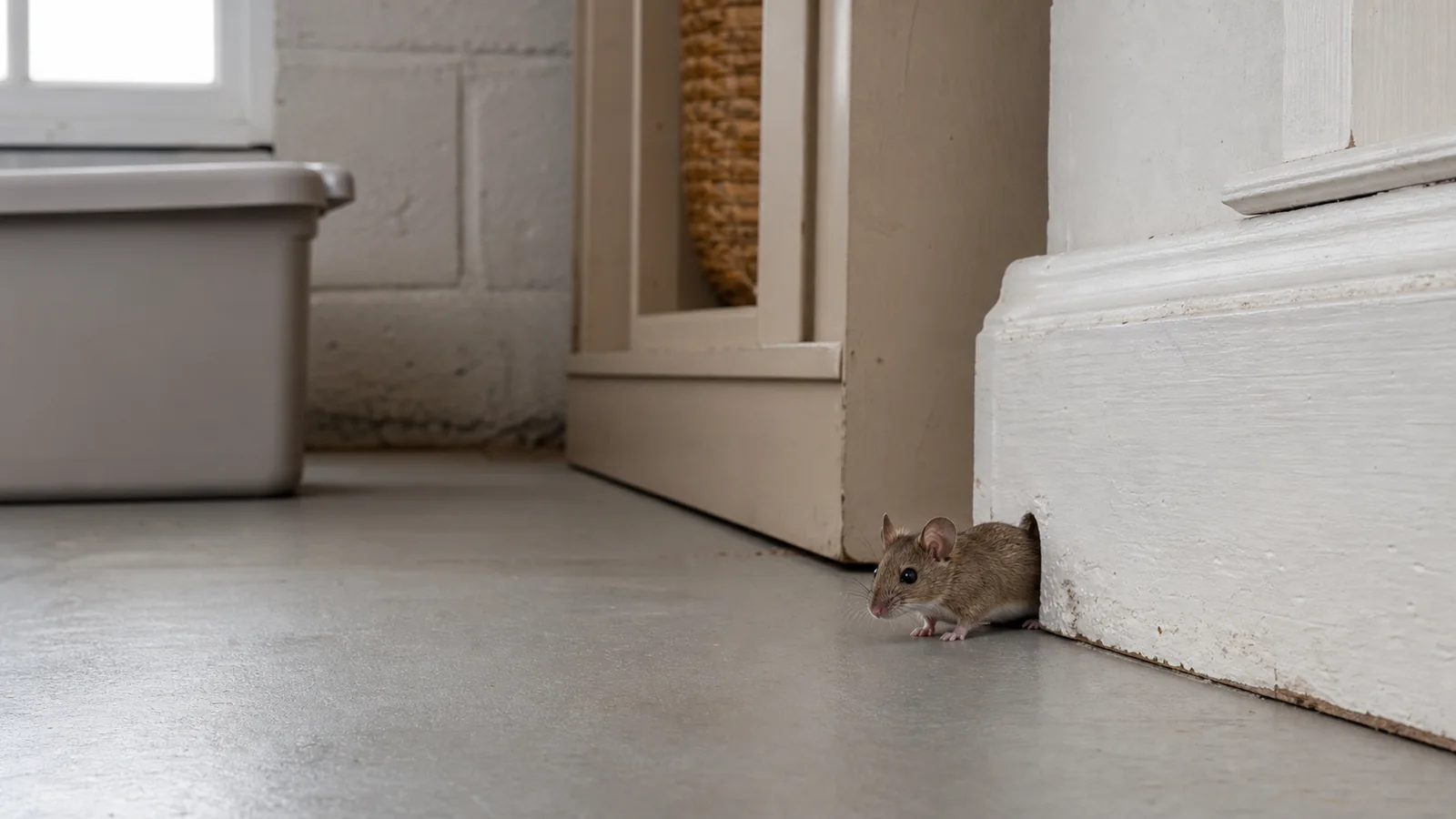
A scratching sound may begin behind a kitchen wall. Droppings may first appear beside a water heater, under a sink, or along the back of a garage. The visible clue is often only one part of the route rats or mice are using through a building.
Cleveland properties include detached homes, duplexes, apartment buildings, storefronts, and mixed residential-commercial spaces. Each has a different collection of seams, additions, service lines, vents, doors, roof transitions, basements, crawl spaces, and shared walls. Cold-weather shelter seeking and year-round access to food or water can turn a small exterior gap into an indoor issue.
Useful rodent control starts by connecting the signs inside with the conditions around the structure. That practical connection is what the word Fix means here: not a vague promise, but a clear service direction that considers removal, control, exclusion, and proofing together.
Learn how to read common rodent signsSome visitors know they have rats. Others see small droppings, hear movement, or want openings sealed after an earlier problem. These service paths make the next step easier to identify.
For larger droppings, strong gnawing, burrows, repeated nighttime activity, or suspected rat travel between exterior areas and the building.
Explore rat control → 02A broader route when the species is uncertain or when active rodent signs need to be assessed before choosing the response.
Review removal options → 03Focused help for mouse-sized droppings, pantry or cabinet activity, light scratching, nesting material, and access through very small gaps.
Get mouse-control details → 04A building-envelope approach to accessible gaps around utilities, vents, doors, foundations, rooflines, and previous repairs.
See how proofing works → 05Rat-focused entry-point planning that considers travel paths, gnawing pressure, lower-level openings, and connected exterior conditions.
Plan rat exclusion →Take note of where a sign appears, how often it returns, and whether it is near food, water, heat, clutter, or an exterior wall. A short timeline is more useful than a guess about how many rodents are present.
Discuss the signs: (216) 541-8761Look along wall lines, behind appliances, inside lower cabinets, near stored food, around utility rooms, and in quiet basement or attic areas. Do not handle droppings casually or sweep them dry.
Chewed packaging, scraped wood, damaged insulation, shredded paper, and disturbed stored goods can point to feeding or nesting behavior. Fresh damage and older marks may require different interpretation.
Scratching, light running, or repeated movement in walls and ceilings often becomes easier to notice at night. Record the room, time, and direction rather than opening a wall based on sound alone.
Regular travel along the same narrow route can leave dark rub marks or tracks in dusty areas. Persistent odors may indicate a nesting, contamination, or inaccessible carcass concern that needs closer evaluation.
Both can contaminate areas and exploit structural openings, but their size, travel habits, nesting choices, and evidence are not interchangeable.
Rat concerns often involve more substantial droppings and gnawing, strong travel paths, lower-level access, garages, basements, exterior burrows, or movement between connected spaces. The inspection should look beyond the room where evidence appeared and consider how the animal reaches food, water, shelter, and the building itself.
Because rats can place pressure on weak repairs and accessible gaps, exclusion planning should match the location and material rather than rely on cosmetic filler.
Compare rat and mouse evidence →Mouse activity can be easy to underestimate. Small droppings inside cabinets, quiet nesting behind stored items, and access near pipe penetrations may indicate movement through voids that are not visible from the occupied room. Their smaller size makes detailed gap work especially important.
A mouse-control plan should connect interior evidence with nearby utilities, doors, foundation or siding transitions, attached garages, and storage practices.
Read the mouse exterminator service guide →Rodents do not need to be visible in daylight to affect a property. Their routes can pass through storage areas, wall cavities, ceiling voids, basements, utility rooms, garages, and food-handling spaces. The practical concern is not alarm; it is locating what was affected and preventing the same route from staying active.
Removal addresses active animals. Exclusion and proofing address the usable route. Treating those as separate questions helps avoid the common mistake of focusing only on what is happening indoors while leaving a practical opening untouched.
A proofing review may consider utility penetrations, gaps at foundation and siding transitions, garage-door corners, damaged screens or vents, pipe and conduit openings, roofline intersections, additions, and repairs that no longer fit tightly. Shared walls and connected units can add another layer because activity may cross spaces that are managed separately.
The right closure depends on the opening, surrounding material, moisture and ventilation needs, accessibility, and evidence of use. Foam alone is not a universal answer. Neither is sealing every visible crack before understanding whether rodents are still active inside.
The order matters. Closing openings too soon can complicate an active problem; addressing activity without planning prevention can leave the same route available.
The conversation begins with what you saw, heard, or found; where it happened; when it began; and which parts of the property are involved. Photos or a timeline can help separate an isolated clue from a repeating pattern.
The useful questions are species, travel route, food and water access, nesting potential, affected areas, and exterior entry conditions. The inspection scope should fit the building rather than follow a one-size-fits-all room list.
The response should reflect whether evidence points to rats, mice, multiple areas, a shared structure, or an uncertain source. Methods and timing depend on findings; this homepage does not promise one identical treatment for every property.
Accessible entry points are prioritized using building-appropriate materials and details. Conditions outside the service scope—such as major roofing, masonry, drainage, or structural repairs—should be identified clearly rather than hidden inside a vague promise.
Monitoring signs, maintaining doors and vents, protecting stored food, managing waste, and watching previous access areas all support the work. Prevention is strongest when the property remains part of the plan.
The underlying biology may be similar, but access, communication, scheduling, and risk points change with the way a property is used.
In a house, a rodent issue can cut across kitchens, garages, attics, basements, crawl spaces, porches, and additions. Homeowners often need help deciding which clue matters first and whether a repair is connected to the activity.
Start with residential rodent removal →Multi-unit properties add shared utility runs, common basements, tenant communication, turnover work, and responsibility boundaries. Documenting unit-specific and common-area evidence helps keep the response organized without assuming every report has the same source.
Plan for a rental-property concern →Storage, deliveries, waste handling, rear doors, floor drains, utility rooms, and adjoining tenants can shape the problem. Decision-makers need a clear account of observed conditions and what building or operational changes belong in the next step.
Discuss a commercial property →Tell us where the activity appeared and what kind of property is involved.
ZIP guides focus on relevant housing and property patterns, entry-point concerns, and the service questions that matter in each covered area. The goal is to help owners and managers connect local building details with the right rodent-control path.
Call to confirm current service availability for your ZIP and property type.
These answers set useful expectations without pretending every property has the same scope.
Ask about your propertyRodent removal deals with active rats or mice. Rodent proofing focuses on the building: finding and closing practical entry points, correcting accessible gaps, and reducing conditions that make re-entry easier. A complete plan may involve both, but the scope depends on what an inspection finds.
Dropping size, rub marks, gnawing patterns, sounds, nesting material, and the location of activity can all provide clues. A single sign is not always enough for a reliable identification, so avoid assuming the species based only on a nighttime noise.
Possible access points include gaps around utility lines, garage-door edges, damaged vents, foundation transitions, openings near sill plates, roofline gaps, and poorly sealed repairs. The relevant points differ by building, which is why proofing should follow an inspection rather than a generic checklist alone.
Avoid sweeping or vacuuming dry droppings, which can stir particles into the air. Keep people and pets away from the area, ventilate when appropriate, and follow current public-health guidance for wet cleaning, protective equipment, and disposal. Extensive contamination may call for specialized help.
They can if usable entry points and favorable conditions remain. That is why the homepage emphasizes both the active problem and the structure. Food storage, clutter, water sources, door gaps, wall penetrations, and exterior openings can all affect the prevention plan.
Cleveland Rodent Fix speaks with homeowners, landlords, property managers, and small commercial property decision-makers. The next step is to describe the property and observed activity by phone so the appropriate service path can be discussed.
Share where and when you noticed activity, whether you found droppings or gnawing, which floors or rooms are involved, and whether the issue affects one unit or several areas. Photos and a simple timeline can make the first conversation more useful.
Call Cleveland Rodent Fix and describe the signs, the affected area, and the kind of building you manage or own.
Call (216) 541-8761Click to call from a mobile device