Vents, soffits, flashing, and intersecting roofs
Upper openings matter when activity appears in attics, ceilings, or upper walls. Repairs must preserve ventilation and water management.
Rodent proofing is about closing the gaps that actually matter—around pipes, doors, vents, foundations, additions, and roof edges—without creating new building problems.
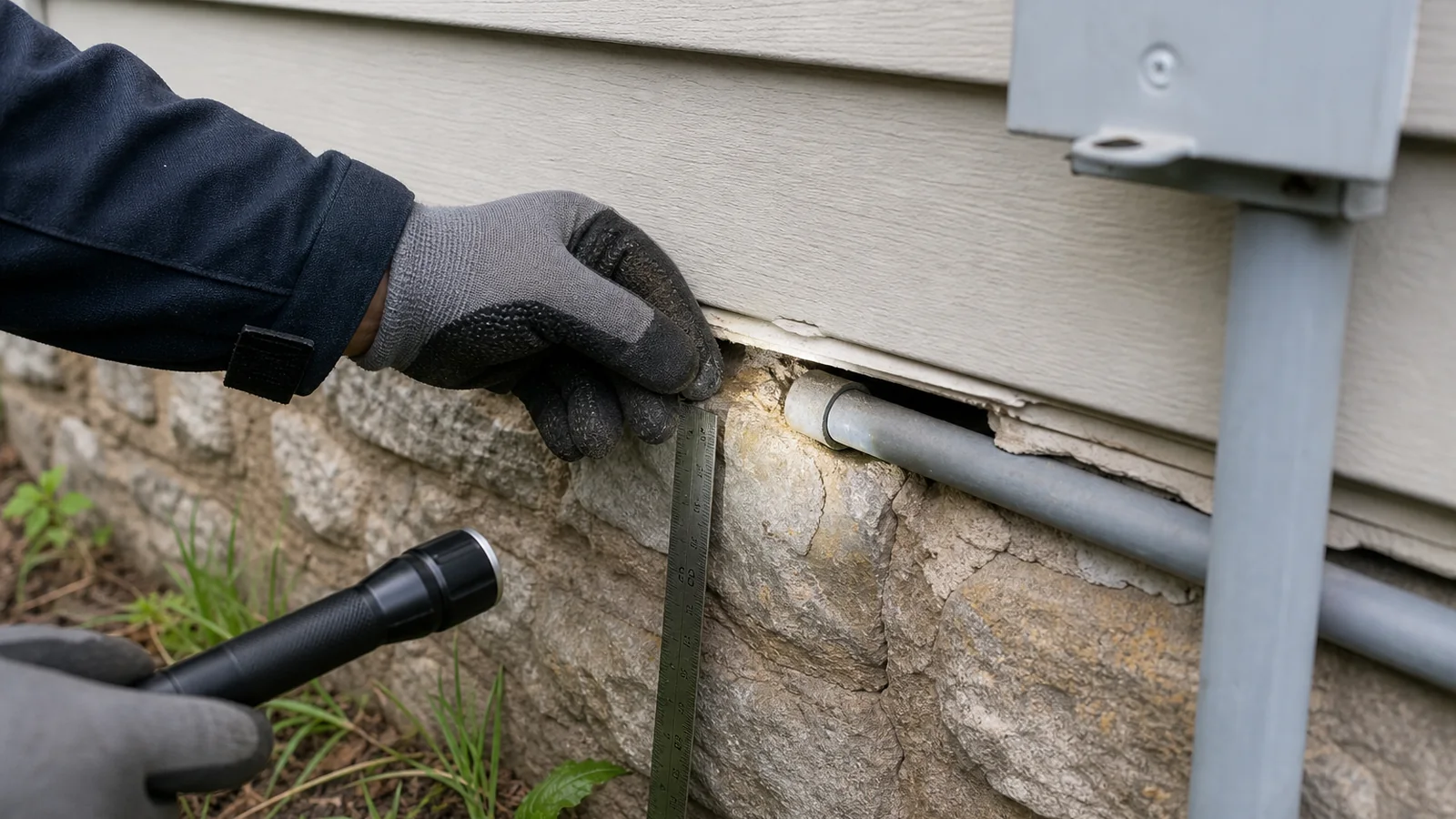
Rodent proofing is not the same as spreading sealant over every visible crack. It is the process of deciding which openings connect to activity, which are large enough or vulnerable enough to matter, and how to close them without damaging drainage, ventilation, doors, equipment, or the surrounding assembly.
Upper openings matter when activity appears in attics, ceilings, or upper walls. Repairs must preserve ventilation and water management.
Cables, pipes, conduits, exterior fixtures, and changes between materials can leave irregular gaps.
A door may close while leaving a usable corner gap. Movement, weather seals, and daily operation all affect the repair.
Lower-level routes can connect exterior cover to basements, wall cavities, garages, and utility rooms.
If rats or mice are still inside, sealing a suspected route without understanding movement can trap an animal, redirect activity, or remove useful evidence. Proofing should be coordinated with control when the property has active signs.
The inspection should distinguish entry points from harmless cosmetic cracks, intentional ventilation, drainage openings, and building defects that require a roofer, mason, carpenter, electrician, plumber, or other trade. Good exclusion work has boundaries.
Once active conditions are understood, priorities can be organized by evidence, accessibility, material condition, and the likelihood that the opening connects outside to a protected interior route.
Proofing becomes especially important when activity returns after control or when signs repeatedly cluster near a building transition.
Repeated evidence beside a pipe, cable, cabinet void, or garage wall can connect an interior sign to a concealed route.
Visible gaps deserve review, but the closure must allow the door to operate and withstand normal use.
Damaged filler, loose screening, or expanding gaps can show that an earlier patch was not suited to the location.
Insulation disturbance or droppings above may lead the inspection toward vents, soffits, eaves, or intersecting rooflines.
When control reduces signs temporarily but they return, access and attractant conditions need a closer look.
Cabinet, wall, porch, or utility work can uncover routes that should be evaluated before finishes close again.
Droppings, rub marks, tracks, gnawing, nesting, and nearby interior signs help separate a likely route from a theoretical opening.
Masonry, wood, siding, metal, roofing, screens, sealants, and moving doors require different closure details.
Vents, weep paths, drainage, and mechanical openings cannot simply be blocked. Rodent resistance must preserve their function.
A repair should be reachable, inspectable, and compatible with normal service work whenever practical.
Describe the activity and the openings you have noticed.
Map active rooms, floors, and voids before deciding which perimeter opening is relevant.
Evidence of use, size, material failure, location, and accessibility help set priorities.
Determine which closures can proceed and which should wait until rats or mice are no longer using the route.
The closure should resist gnawing and weather while respecting movement, ventilation, drainage, and service access.
Major roofing, masonry, door, structural, drainage, or utility defects should be identified for the appropriate trade.
Doors wear, sealants age, utilities change, and repairs move. Periodic checks protect the value of proofing work.
Material choice should follow the location, not a slogan.
Pipes, conduits, and cables need closures compatible with the surrounding wall and future service needs.
Rodent-resistant screening or detailing must preserve required airflow and equipment performance.
Sweeps, seals, thresholds, framing, and door alignment must work together under repeated use.
Some conditions exceed pest-proofing work and belong with a roofer, mason, carpenter, or other building professional.
Sealing practical entry points is strongest when food, water, waste, storage, vegetation, and exterior clutter are also managed. Proofing cannot compensate for a door that is routinely propped open or food that remains available overnight.
Likewise, sanitation alone cannot close a utility gap. Prevention works by combining building detail with operating habits. The balance differs between a home, rental building, restaurant-adjacent storefront, office, or storage space.
Study common rodent entry conditions →Attached garages, basement utilities, kitchen plumbing, attic access, additions, and enclosed porches often connect finished rooms with less-visible edges. Proofing should work with normal home maintenance.
Common basements, pipe chases, utility rooms, loading areas, trash storage, and roof or facade defects may affect more than one tenant. Documentation helps assign repairs and coordinate access.
Read the managed-property guide →Many local properties combine masonry foundations, framed walls, additions, porches, garages, roof intersections, and utility upgrades completed at different times. Freeze-thaw cycles, moisture, door wear, and ordinary maintenance can change gaps that once seemed minor.
That does not mean every crack is a rodent opening. It means exterior transitions deserve a thoughtful review tied to evidence inside.
No. Some openings provide required ventilation, drainage, equipment clearance, or movement. The goal is rodent resistance without interfering with building function.
Foam is not a universal standalone solution. Location, exposure, gnawing pressure, surrounding material, movement, and weather all affect the appropriate detail.
Not always. When rodents are active inside, closure timing should be coordinated with control so animals are not trapped or redirected deeper into the building.
Major roofing, masonry, structural, drainage, utility, or door-system work may require another trade. An inspection should identify those boundaries clearly.
There is no single interval for every building. Moving doors, exposed sealants, roof details, utility work, and previous problem areas deserve periodic review and checks after relevant construction.
Interior unit gaps may be addressed individually, but shared basements, chases, exterior walls, rooflines, and common doors often require a building-wide view.
Call with the active signs, visible gaps, and building areas that concern you.
Call (216) 541-8761