Scratching in a repeatable zone
Note whether it comes from the ceiling, a vertical wall, a radiator or pipe chase, or the edge of an attic. Framing can carry noise, so the loudest point is not always the animal’s exact location.
Hearing scratching over a bedroom? Finding fresh droppings near stored boxes? Tell us where and when it happened. Those simple details are often enough to start narrowing down the problem.
Rodents usually leave more than one kind of evidence. The strongest starting point is a cluster of recent signs, not a single unexplained noise.
Note whether it comes from the ceiling, a vertical wall, a radiator or pipe chase, or the edge of an attic. Framing can carry noise, so the loudest point is not always the animal’s exact location.
Photograph their location before cleanup. Size, shape, distribution, and whether new pellets appear can help separate an old trace from continuing rat or mouse movement.
Fresh edges and debris below the damage deserve attention. Compare nearby food, nesting cover, water, and openings rather than treating the damaged object as the whole problem.
Rats and mice commonly follow walls, joists, pipes, and stored materials. A repeated line can connect an indoor clue to a transition outdoors.
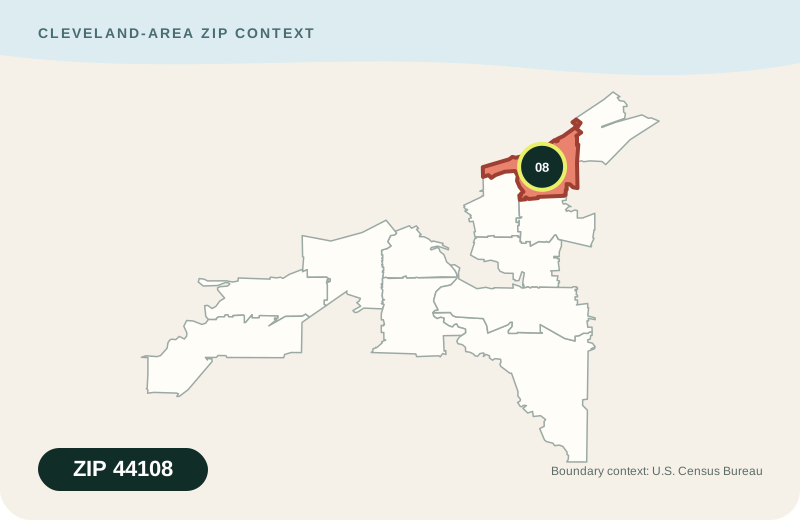
Homes and small buildings in 44108 are not defined by one construction pattern. A property may have original masonry, repaired roof edges, replacement siding, enclosed rear space, updated utilities, and interior finishes completed in different eras. The risk is often where those systems meet rather than in the middle of an intact wall.
Wind, rain, freeze-thaw cycles, and ordinary building movement can open trim joints, loosen screening, or worsen an old patch. Vegetation and stored items may then give rodents cover while they investigate. Indoors, attic insulation, wall cavities, closets, and low-traffic storage offer protected travel that can delay a clear sighting.
That is why a 44108 assessment should connect evidence from the occupied room to a plausible building transition. The ZIP establishes local context; the property itself establishes the route.
Call when pellets return after documentation, sounds recur along the same ceiling edge, packages show fresh damage, or an attic clue aligns with an exterior opening.
Instead of beginning with a generic checklist, the review follows the most recent, best-located sign.
Droppings, tracks, odor, sounds, nest material, gnawing, and sightings are compared for freshness and scale. This helps avoid treating every small pellet or household noise as proof.
Useful preparation: photos, dates, affected rooms, and anything already moved or cleaned.We compare the room with its ceiling, wall penetrations, nearby plumbing, attic or basement relationship, and exterior side. The goal is a continuous explanation.
Useful question: what lies directly above, below, and behind the sign?Removal tactics, sanitation boundaries, storage changes, and exclusion priorities should support one another. Blind closure can redirect activity or trap an animal inside.
Useful outcome: a sequence, not an unranked list of gaps.Mice can use narrow irregular openings and interior chases. Read the Cleveland mice removal approach for a mice-first explanation.
See how active rat signs are assessed before assuming a single sighting tells the whole story.
Effective proofing is not a sweep of cosmetic filler. Openings must be evaluated by size, surrounding material, weather exposure, movement, ventilation, and whether they connect to documented activity. Roof-edge details may need to preserve drainage; vents must continue to function; utility openings may require future access.
Priorities can include damaged screening, loose trim, service penetrations, door edges, foundation-to-framing joints, and gaps exposed by an addition or renovation. The correct material and repair responsibility vary. Roofing, masonry, structural, electrical, or major door work may belong to the appropriate trade.
After high-confidence routes are addressed, monitoring should return to the original sign locations. A quiet week is useful, but a durable plan also checks whether fresh pellets, noise, or gnawing reappears after weather changes or work elsewhere on the building.
Plan evidence-based rodent proofingThese answers help organize the next step without turning uncertain evidence into a diagnosis.
No. Building movement, plumbing, branches, and other animals can create noise. Repetition, exact location, droppings, gnawing, tracks, and an access route make the case stronger.
Photograph the area, follow appropriate cleanup precautions, and monitor whether pellets return. Appearance alone can mislead, so new accumulation in the same place is more useful.
Work can disturb a void, remove cover, or change a travel route. Review the affected area and nearby openings rather than assuming the repair caused a new infestation.
Usually not as a first step. Sound can travel through framing. Compare the wall with adjoining rooms, upper and lower levels, utilities, and exterior conditions before disturbing finishes.
No. Rodents may climb from a lower access point through walls or chases. Roofline, vents, siding transitions, utilities, and lower routes all deserve comparison.
Share the property type, affected room and level, time of activity, evidence found, recent cleanup or repairs, and whether children, pets, tenants, or customers affect access planning.
Call Cleveland Rodent Fix and describe what changed inside the building.
Call (216) 541-8761