Align rooms and utilities by floor
Stacked bathrooms, kitchens, mechanical lines, and chases can explain signs that appear far from the obvious exterior wall.
Record what is directly above and below the clue.Buildings in 44106 can have several possible entry points at once. The job is to find the one that lines up with fresh signs inside—not to seal every gap blindly.
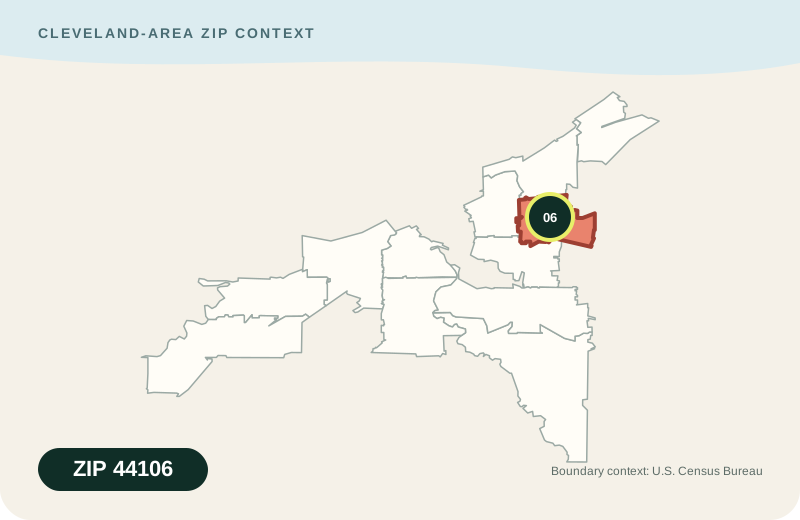
“The Circle,” Little Italy, or the Clinic area helps us locate you. Next we need to know whether this is an apartment, older house, institutional building, or mixed-use property.
Do not worry about guessing the entry point. Tell us the exact room and the newest sign.
Different roof heights, porches, additions, trim, vents, masonry ledges, exterior lines, and vegetation can create climbing access or concealed upper openings. Attic droppings or ceiling sounds make these zones relevant, but do not prove the route began overhead.
Lower openings may connect upward through pipe chases, wall voids, stairs, and utility cavities. Masonry joints, doors, basement windows, conduits, drains, and framing transitions are compared with evidence on the floors above.
44106 contains a varied mix of houses, apartments, institutional and commercial buildings, rentals, renovated structures, and properties with additions or outbuildings. The relevant rodent risk is not the architectural label; it is the number and condition of junctions between masonry, framing, roofs, doors, utilities, and occupied space.
A long-lived building can accumulate repairs and service changes. A renovated building can hide older pathways behind new finishes. Flat, low-slope, and pitched roof sections may meet walls differently. Utility routes can pass through several materials before reaching a kitchen, mechanical room, or upper floor.
This page deliberately avoids broad homepage language. Its focus is narrower: establish an evidence-supported entry hypothesis for a complex envelope, choose a safe inspection path, and assign repairs to the right scope.
The first plausible gap is not automatically the active opening.
Stacked bathrooms, kitchens, mechanical lines, and chases can explain signs that appear far from the obvious exterior wall.
Record what is directly above and below the clue.Masonry-to-frame, roof-to-wall, siding-to-trim, and pipe-to-opening details fail differently and require different repairs.
Do not fill a functional drainage or ventilation opening blindly.Tracks, staining, gnawing, droppings, disturbed dust, or repeat monitoring can strengthen or weaken the hypothesis.
Change the plan when the evidence does not fit.Complex buildings reward clear scope. Pest-control work can identify and prioritize access evidence, but roofing, masonry, structural, electrical, mechanical, fire-rated, historic, or major door work may need a qualified specialist. The repair must survive weather and use while preserving ventilation, drainage, utility service, egress, and the surrounding assembly.
Choose placement and monitoring around species, travel, occupants, pets, tenants, customers, and access constraints.
Sequence primary routes so animals are not trapped or redirected into a harder-to-reach space.
Use the appropriate professional when a defect extends beyond a localized pest-proofing repair.
Monitor the repaired opening and indoor evidence zone through changing weather and building use.
Recurring droppings near stacked utilities, attic contamination, gnawing beside service lines, sounds along a chase, or activity after renovation deserves a route-based inspection.
Yes. New finishes may cover older openings or chases without changing the exterior access. Current evidence and building plans, when available, can guide inspection.
No. A roofline opening is possible, but rodents can also climb from lower access through walls or utility chases. Compare high and low routes.
Only with a solution appropriate to that vent’s required airflow, moisture, heat, maintenance, and code function. Improvised blockage can damage the building.
Scope depends on the materials, water management, access, and extent. A mason, roofer, building-envelope professional, or other qualified trade may be appropriate.
Animals may travel in a chase, and framing or pipes can transmit noise. Map timing and physical evidence before opening multiple walls.
General preventive work may proceed, but closing a suspected primary route without evidence can trap or redirect animals. Prioritize investigation and monitoring.
Tell us the affected level, building materials, recent work, and evidence you found.
Call (216) 541-8761