Fresh droppings, feeding damage, sightings, tracks, or recurring sounds suggest current movement that needs to be mapped and controlled.
A wider view of activity, access, and affected areas
Rodent Removal in Cleveland Built Around the Whole Property
Not sure whether you are dealing with rats or mice? Seeing signs in more than one room? We help sort out what is active, what needs cleanup, and what should be sealed.
First question: what is actually in scope?
“Rodent removal” can describe several very different problems
A mouse nest behind a kitchen cabinet, rat activity in a shared basement, scratching in an attic, and an odor from a dead rodent are not interchangeable service calls. They require different access decisions, safety considerations, and expectations.
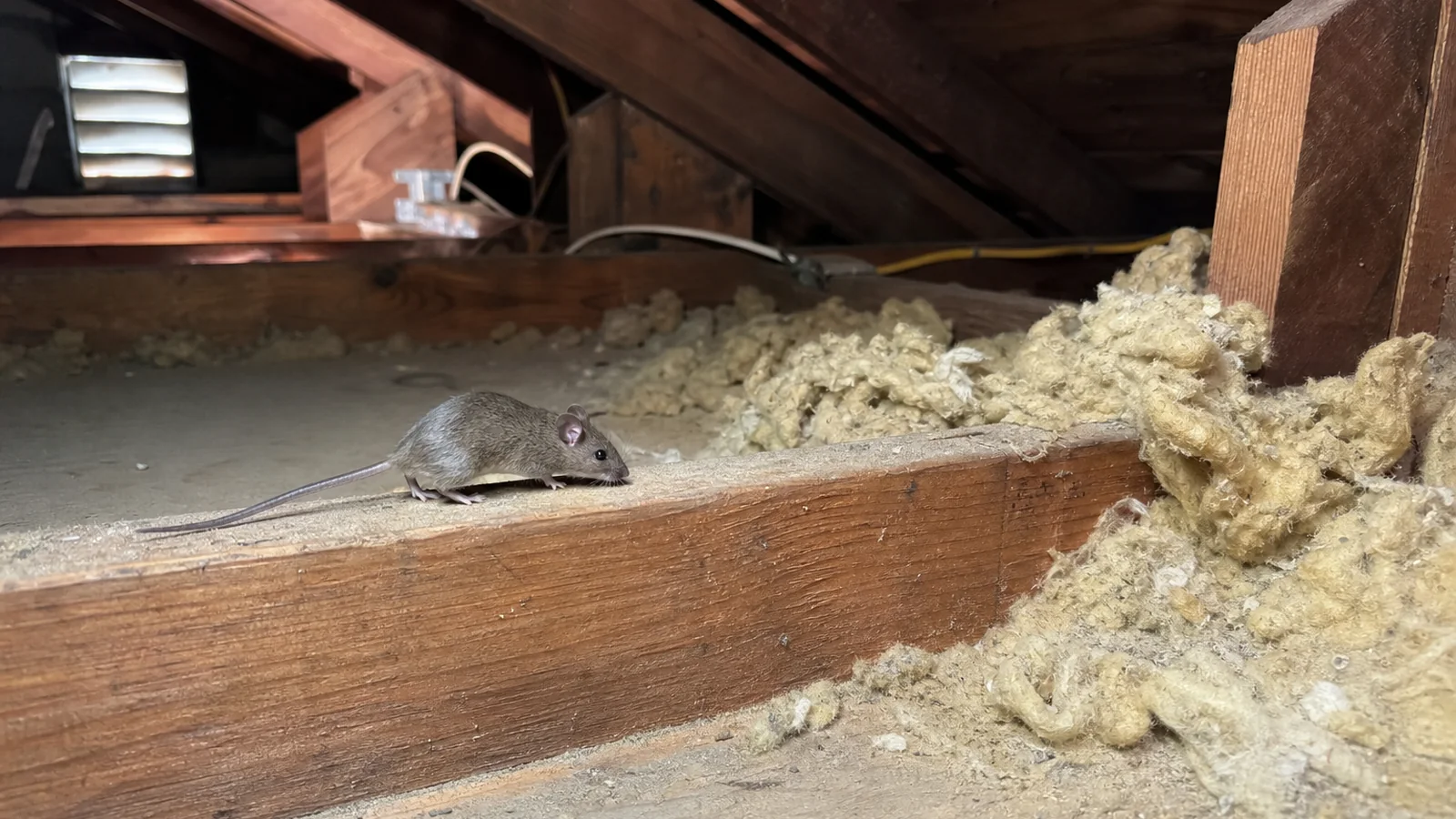
Shredded paper, fabric, insulation, and stored debris may need evaluation after activity is addressed, especially when the material sits inside a void.
Odor location, access, building finishes, and whether the carcass can be reached safely all affect what removal is practical.
Historic droppings or abandoned nesting can remain after activity ends. Freshness and recurrence matter before a new infestation is assumed.
The full removal process
A decision tree, not a one-step treatment
The objective is to determine what is active, where it moves, what can be removed, what requires cleaning, and which openings or conditions should be addressed afterward.
Call (216) 541-8761- 01
Define the report
Collect sightings, sounds, droppings, odors, dates, rooms, floors, and any recent construction or vacancy. Different reports may describe one route—or unrelated issues.
- 02
Identify likely species and zones
Dropping size, gnawing, travel marks, nesting material, access size, and placement help distinguish mice from rats and current activity from old evidence.
- 03
Choose control and removal access
Occupied rooms, pets, children, tenants, food areas, finished surfaces, and inaccessible voids all affect how the work can proceed.
- 04
Address retrievable material
Carcasses or nesting material can only be removed where access is safe and practical. Opening a wall, ceiling, duct, or built-in finish is a separate decision that may involve another trade.
- 05
Separate cleanup from prevention
Affected surfaces, porous materials, and inaccessible contamination need an appropriate cleanup plan. Entry points and attractants then become the prevention track.
A removal plan becomes clearer when observations are grouped by type. Droppings tell us about travel and potential contamination. Gnawing suggests access to food or materials. Sounds provide timing and location. Odor can indicate nesting, urine accumulation, or a carcass, but it may travel through wall and floor cavities.
Look for repeated evidence along baseboards, behind appliances, under sinks, beside water heaters, near stored food, above suspended ceilings, around attic insulation, and at garage or basement edges. In rental and commercial properties, compare unit reports with common-area conditions.
Do not erase the pattern before documenting it. Photograph signs from a safe distance, note the date, and avoid dry sweeping.
Use the rodent-sign field guide →Evidence by category
Signs that shape a rodent-removal plan
- 01Fresh or recurring droppings
- 02Chewed packaging and nesting material
- 03Wall, ceiling, attic, or basement sounds
- 04Persistent odor in a defined area
- 05Tracks, rub marks, or disturbed dust
Inspection without tunnel vision
What we look for across a Cleveland property
Broader rodent infestation control should follow the building’s connections rather than stop at the first dropping.
Interior activity zones
Kitchens, utility rooms, storage, attics, basements, garages, ceiling voids, and quiet edges are reviewed in relation to reported evidence.
Movement between levels
Pipe chases, wall cavities, stair enclosures, soffits, additions, and shared utility runs can explain signs that appear far apart.
Exterior access pressure
Doors, vents, roof intersections, masonry transitions, siding edges, utility penetrations, and attached structures are considered as possible routes.
Occupancy and operating conditions
Food storage, waste, deliveries, vacancies, tenant turnover, pets, clutter, and water sources affect both control and prevention decisions.
A distinct removal scenario
Dead rodent removal depends on location and access
A localized odor does not always identify the exact cavity where a carcass rests. Air movement can carry odor through wall bays, duct chases, floor openings, and connected rooms. Before cutting finishes, it helps to narrow the source and consider whether access would cause disproportionate damage.
If a carcass is accessible, handling and surface cleanup should follow current public-health guidance. If it is inside a sealed void, the decision may involve waiting, targeted access, odor management, or work by a contractor suited to the affected material. No page can promise that every carcass is retrievable without opening the building.
Mixed signs or an uncertain species?
Describe the evidence by phoneStart with the wider removal conversation.
Describe the evidence and every affected area, including odor or inaccessible spaces.
Cleanup is not an afterthought
Droppings, nesting, damage, and exposed materials
Health-related concern calls for careful information, not fear-based claims.
Hard surfaces
Small affected areas may be suitable for wet-cleaning procedures using current public-health guidance and appropriate protection.
Porous materials
Insulation, cardboard, fabric, and other absorbent materials may require different decisions depending on contamination and access.
Food and packaging
Items showing gnawing or contamination should be isolated and handled according to applicable food-safety guidance.
Building components
Gnawed or soiled wiring, duct materials, finishes, and insulation may need evaluation by the appropriate qualified trade.
Residential use
Homes need room-by-room clarity
In a home, occupants may hear activity before seeing evidence. Kitchens and pantries reveal feeding; attics and basements provide shelter; attached garages and additions can bridge outside and inside. Families also need methods planned around children, pets, sleeping areas, and daily routines.
For mice-first kitchen and wall activity, use the mouse guide →Managed buildings
Rental and commercial properties need a communication map
One report from one unit may not show the full route. Shared basements, waste areas, utility lines, suspended ceilings, deliveries, vacancies, and adjoining occupancies need coordinated documentation. The decision-maker should know which observations came from tenants, maintenance staff, customers, or common areas.
Review the rental-property response checklist →Cleveland, OH context
Construction layers can hide the route
Cleveland buildings may combine masonry basements, framed additions, enclosed porches, attached garages, remodeled kitchens, dropped ceilings, and utility work installed decades apart. These layers can create connected voids and patched openings that are difficult to interpret from one room.
Seasonal shelter pressure matters, but rodent activity is not confined to winter. Food, water, cover, waste, and a usable opening can support problems in any month. An inspection should respond to current conditions rather than a calendar assumption.
Is rodent removal the same as extermination?
The terms are often used loosely. Removal may include control of active rodents, retrievable carcass or nest concerns, and planning for affected areas. The actual scope should be defined from evidence instead of assumed from the label.
What happens when rodent odor points to a closed wall void?
First compare where the odor is strongest with wall cavities, plumbing paths, registers, and adjoining rooms. Retrieval depends on a reasonable location hypothesis and safe access; opening finishes without that evidence can create damage without finding the source.
How do you know whether droppings are old or new?
Appearance, location, recurrence after appropriate cleaning, nearby activity, and other evidence all help. Visual age estimates are imperfect, so the broader pattern matters.
Should insulation be replaced after rodents?
That depends on the amount and location of contamination, material condition, access, and whether activity is resolved. Insulation replacement is a separate scope that should not be prescribed without seeing the affected area.
Can removal be planned for an occupied rental building?
Yes, but reports, access permission, shared areas, tenant communication, pets, children, and unit-to-unit routes all need to be considered in the plan.
What should I tell you when I call?
Share the property type, rooms or units involved, dates of sightings or sounds, dropping locations, odors, recent repairs, and whether anyone has already placed traps or sealed openings.
Make the scope clear before the work begins
Talk through your Cleveland rodent-removal concern
Active animals, nesting, odor, cleanup, and prevention each deserve the right next step.
Call (216) 541-8761