Foundation edges and lower openings
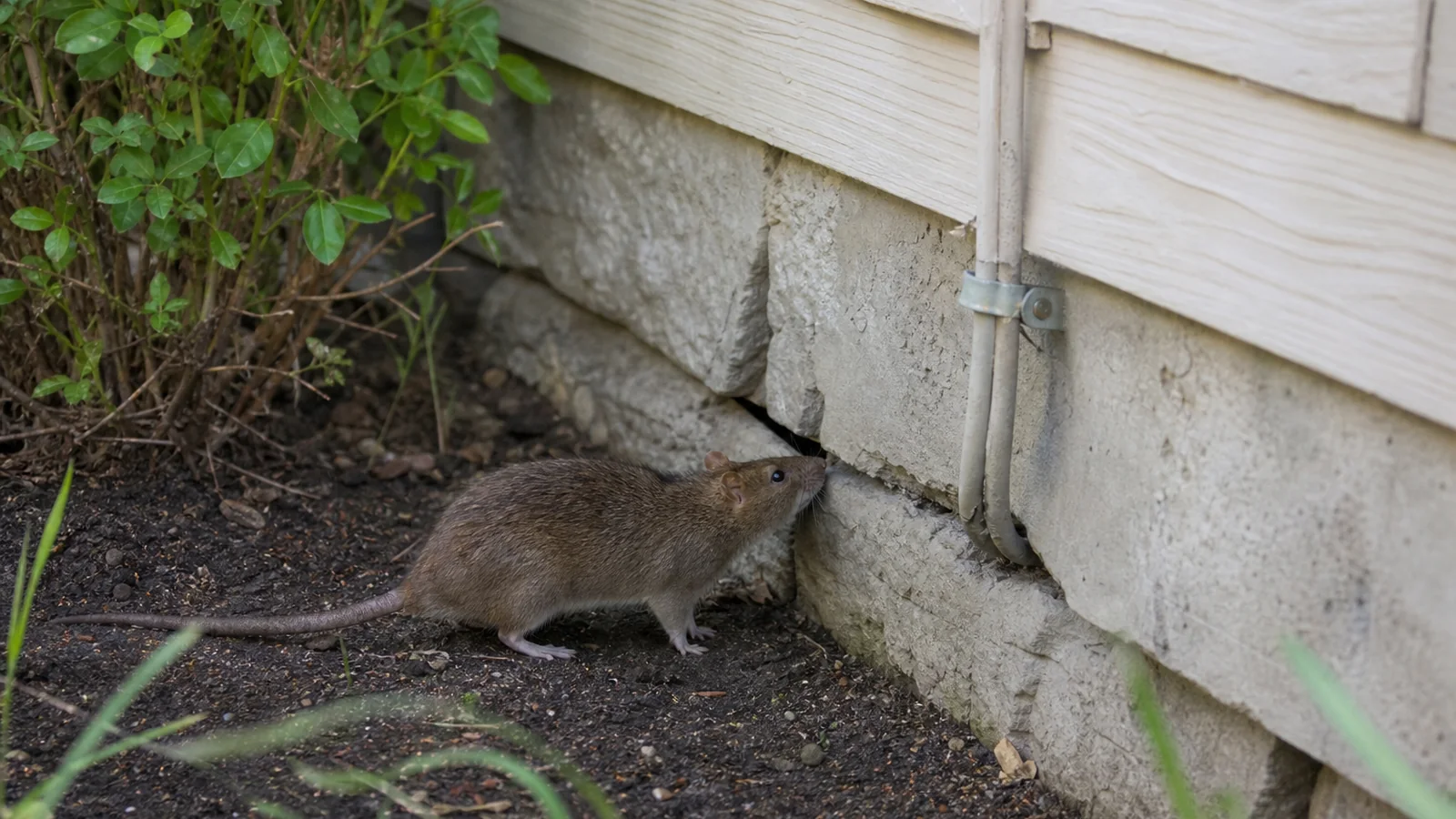
Masonry gaps, penetrations, window wells, basement doors, slab transitions, and openings near exterior cover can connect rats to lower levels.
Good rat exclusion starts with a careful inspection. Find the openings rats are using, deal with active animals, then make repairs that can hold up over time.
An opening should not be prioritized only because it looks untidy. The strongest decisions connect exterior vulnerability to signs of use and activity inside.
Droppings, rub marks, tracks, gnawing, nesting, sightings, and repeated sounds identify active or historic zones.
Protected edges, wall lines, pipe runs, ledges, burrows, and repeated exterior paths help connect zones.
Gnawing, staining, disturbed material, track marks, or a direct connection to a known route increases priority.
Material, movement, drainage, ventilation, weather exposure, and repair access determine how closure should occur.
Rat exclusion is the entry-denial side of rat control. Its purpose is to make practical routes harder to use by closing or repairing accessible openings after the active situation is understood.
That sequencing matters. Rats inside a building may use more than one route, and closing a visible hole too soon can redirect movement. An exclusion plan should coordinate with monitoring and control rather than operate as an unrelated patching project.
The plan also needs limits. A loose vent screen may fit exclusion work; a failing roof edge, displaced masonry, damaged sewer component, or structural opening may need a qualified building trade. Clear scope protects the property better than an all-purpose promise.
The exact route varies, but these building zones organize the search.
Masonry gaps, penetrations, window wells, basement doors, slab transitions, and openings near exterior cover can connect rats to lower levels.
Utility work can leave irregular annular gaps or old patches that no longer fit the surrounding material.
Bottom corners, worn sweeps, damaged thresholds, and misalignment can leave usable space despite a door that appears closed.
Upper access matters when rat evidence appears in attics, ceiling voids, or upper wall systems. Repairs must maintain ventilation and weather control.
Porches, garages, sheds, canopies, and later additions create transitions where materials and framing meet imperfectly.
Common basements, party walls, pipe chases, and adjoining commercial spaces can extend the route beyond one tenant area.
Documentation helps distinguish control tasks, exclusion tasks, maintenance items, and repairs for another contractor.
Location, freshness, direction, affected level, and relationship to food, water, or cover.
Opening dimensions, surrounding materials, evidence of use, exposure, and connection to interior zones.
Door movement, ventilation, drainage, utility access, fire or safety considerations, and weather resistance.
Which items fit exclusion, which require maintenance approval, and which belong to a specialized trade.
Call with the opening location and the signs you found inside.
The process keeps active control, closure, and building repair in the right relationship.
Determine where rats are active, reduce accessible attractants, and coordinate control. Avoid closing a primary route without an exit and monitoring strategy.
Prioritize accessible gaps supported by evidence, especially where the surrounding construction can accept a durable, functional closure.
Route roofing, masonry, structural, door, drainage, sewer, or utility defects to the appropriate trade instead of hiding them beneath cosmetic patching.
Review previous travel areas, new signs, repair condition, moving doors, and any later utility or remodeling work that changes the envelope.
Exclusion is strongest when several clues point to the same path.
Review rat and rodent signsDark staining or hair along an edge may indicate repeated contact, especially when paired with droppings or tracks.
A damaged prior repair suggests the material or detail did not match the location and pressure.
Protected exterior travel lines can connect burrows, waste, vegetation, stored items, or adjoining structures to the building.
Recurring droppings or sounds near a garage wall, sill area, utility chase, or basement room can focus the exterior review.
Continued signs may mean another route exists, the repair failed, or active rats were not addressed before closure.
By reducing access, exclusion supports efforts to protect stored food, occupied rooms, insulation, packaging, and building materials from new activity. It also helps reduce the chance that fresh droppings and nesting material will appear along the same route.
Exclusion does not clean existing contamination. Droppings, urine-affected surfaces, nesting, carcasses, and damaged materials require their own assessment. Follow current public-health guidance and avoid dry sweeping or vacuuming droppings.
Plan for affected areas safely →A house may need coordinated attention at the basement, attached garage, kitchen utilities, enclosed porch, addition, and roofline. The owner can often integrate exclusion with routine maintenance.
Exterior repairs, unit access, common basements, waste areas, and tenant communication require a documented priority list and clear responsibility for follow-up.
Loading and rear doors, utility rooms, stock areas, adjoining occupants, and waste handling create operating conditions that must be managed alongside physical closure.
Cleveland properties can combine masonry lower levels, framed upper walls, attached or detached garages, enclosed porches, additions, and utility upgrades from different periods. Each transition is a place where materials meet and maintenance histories diverge.
Seasonal temperature and moisture changes can affect door seals, joints, and older repairs, but age alone does not determine risk. The inspection should rely on present condition and rat evidence rather than assumptions about a neighborhood.
Rat control addresses active animals and activity. Rat exclusion denies practical entry routes. They are connected, but closure timing should follow an understanding of what remains inside.
Evidence of use, connection to interior activity, opening condition, surrounding material, accessibility, and functional constraints all affect priority.
Some work may proceed, but closing primary routes without a coordinated control and monitoring plan can trap or redirect animals. The sequence must be property-specific.
Minor sealing details may fit the scope, while alignment, track, threshold, framing, or door replacement may require a door contractor or other trade. Inspection should clarify that boundary.
No responsible service can promise that. New damage, open doors, utility changes, neighboring conditions, food access, and maintenance can create new pressure or openings.
Keep the opening and repair list, photographs when available, dates, unit or area reports, follow-up signs, door or vent maintenance, and any later construction that changes the building envelope.
Call with the signs inside and the openings you have noticed outside.
Call (216) 541-8761