Delivery and service doors
Check alignment, lower corners, thresholds, time left open, and the clear inspection zone on both sides.
In a mixed-use or urban building, rodent prevention has to fit daily life—deliveries, rear doors, trash, shared utilities, storage, tenants, and older repairs.
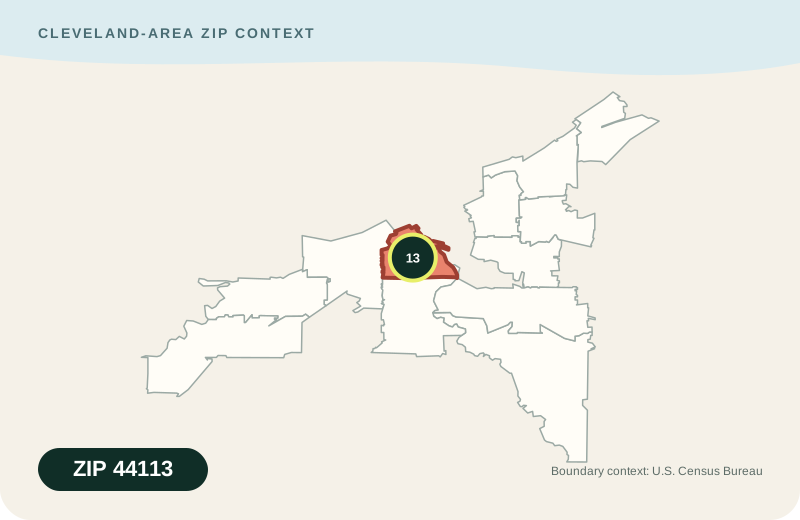
A Tremont house, an Ohio City apartment, and a mixed-use building near Downtown will not have the same rodent problem. Rear doors, trash rooms, basements, shared utilities, and neighboring businesses all matter.
“We see them near closing time by the stock-room door” gives us something concrete to work with.
A door is not just a gap measurement. It opens for people, packages, stock, waste, maintenance, and emergencies.
Properties in 44113 can include detached and attached residences, apartment buildings, renovated structures, storefronts, offices, restaurants, storage, and mixed-use buildings. One envelope may have masonry walls, framed additions, flat or low-slope roof details, multiple utility generations, loading or rear doors, and interior separations that do not match the exterior at a glance.
That complexity gives rats and mice more than one way to remain concealed. A lower utility opening can lead to a chase. A roof-edge defect can reach an upper void. A commercial rear room may supply food or cover while signs first become noticeable in residential space. The response must distinguish shared routes from separate incidents.
Local relevance here comes from use as much as construction. The inspection should account for who controls each area, when access is available, how waste and deliveries move, and which repairs require owner, manager, tenant, or specialized-trade coordination.
Door cycles, floor edges, furnishings, food-contact sensitivity, and sightline expectations affect inspection and control placement.
These areas can combine access, resources, and low visibility. Evidence is mapped before stock or equipment is rearranged.
Unit reports are recorded by room and level, then compared with shared utilities and the business or common space below.
Repairs are ranked by evidence and building function. Drainage, ventilation, fire separation, security, and egress must be respected.
Resident report
“Scratching is above the kitchen after the business downstairs closes.”
Inspection focus: stacked utilities, ceiling void, adjoining roof or wall connection, and lower-level evidence.
Manager report
“Droppings are returning near the service door.”
Inspection focus: door mechanics, waste and delivery patterns, travel edges, and evidence beyond the door zone.
Small-business report
“A package was damaged in rear storage.”
Inspection focus: species clues, stock rotation, hidden edges, receiving practices, and the exterior approach.
Recurring droppings, damaged stock, active gnawing, repeat sightings, nest material, or odor near food, customers, residents, or utilities should be documented and addressed promptly.
A loose patch that blocks a vent, interferes with a delivery door, or fails cleaning routines is not effective exclusion. Door systems need mechanical correction. Utility and fire-rated assemblies may require specialized materials and qualified trades. Roof, masonry, drainage, and structural defects should be assigned appropriately.
Proofing is sequenced with active removal so animals are not sealed inside or shifted into another tenant’s space. After closure, monitoring covers the original evidence area, the repaired opening, and connected floors or rooms. Managers benefit from a simple record of findings, access, actions, and follow-up.
Prevention also includes operational adjustments: protected storage, clear wall lines, managed spills, sound waste practices, fast reporting, and inspection after construction or utility work. These measures reinforce the building repair without pretending housekeeping alone solves an infestation.
Plan proofing for an urban buildingYes. Utility chases, walls, ceilings, stairs, and exterior openings may connect uses. Evidence from both areas should be aligned by location and time before deciding it is one route.
Anyone who observes them should report exact room, level, date, and evidence through the property’s process. A manager can then compare reports while respecting access and privacy.
Not necessarily. The plan should account for operating hours, door use, stock movement, and safe placement. Specific sanitation or safety conditions may require temporary adjustments.
It depends on alignment, threshold, frame, hardware, security, and wear. A durable repair must function through repeated use; some defects require a door professional.
Isolate the affected area, avoid unsafe dry cleanup, follow applicable public-health and food-safety guidance, and address active animals and access points as part of the response.
Roof inspection and repair should respect fall safety, drainage, membranes, flashing, vents, and property authorization. Qualified roofing help may be needed.
Call with the property use, affected level, recent signs, and access constraints.
Call (216) 541-8761