Rear and side doors
Worn lower corners, uneven thresholds, and doors that do not close consistently can change day to day. Repairs must tolerate regular use rather than merely cover daylight.
On close-set residential blocks, rats and mice may use a back door, porch gap, shared drive, utility opening, or narrow side yard. The first step is matching the outdoor opening to the room with fresh signs.
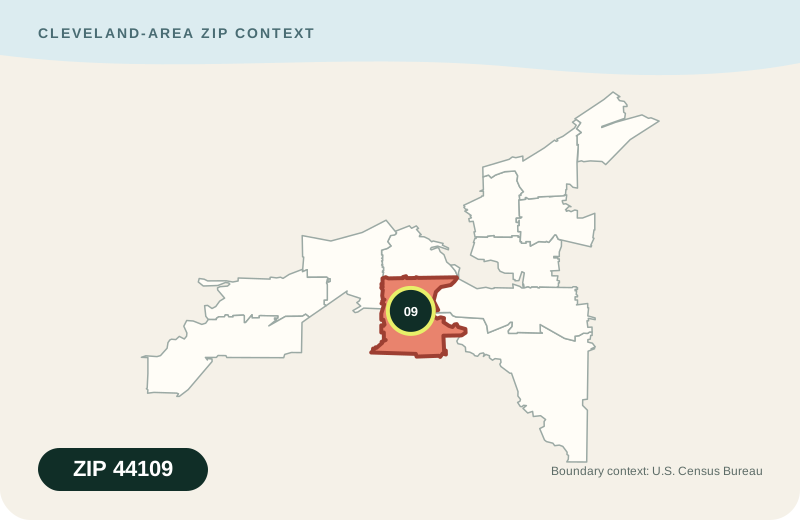
People describe 44109 by neighborhood, major street, parish, or a nearby landmark. We can work with that. Then tell us whether the problem is in a duplex, a single-family home, a basement, or a rear addition.
If it sounds like it is “somewhere in the wall,” which room and what time do you usually hear it?
An opening matters when it offers access, shelter, and a connection to indoor evidence.
Worn lower corners, uneven thresholds, and doors that do not close consistently can change day to day. Repairs must tolerate regular use rather than merely cover daylight.
Utilities may pass through masonry, siding, rim areas, or additions. Old filler can shrink or separate while the opening behind it connects directly to a chase.
Upper routes deserve attention when attic or upper-wall evidence appears. Functional airflow and drainage must be preserved during repair.
Closely spaced houses, duplexes, small apartment properties, garages, porches, alleys, and narrow side yards can create many sheltered edges within a short distance. Rodents may move behind bins, vegetation, stored materials, fencing, or steps before testing a door corner or utility gap.
Density does not mean every property shares the same problem. It means exterior conditions can change quickly from one building edge to the next. A well-kept kitchen can still receive mice through a pipe chase. A rear storage room can show rat evidence even when the public or front portion of a property looks untouched.
The useful local question is not “Are rodents common here?” It is “Which exterior condition connects to fresh evidence at this address, and what should happen first?”
The inspection separates moving components, fixed penetrations, overhead transitions, and resource zones.
Rear entries, side doors, bulkhead or basement access, garage doors, and screen doors are checked for lower-corner wear, alignment, and the route immediately inside.
Masonry joints, window openings, framing transitions, and sheltered corners are compared with basement or first-floor evidence.
Pipe, cable, conduit, porch, deck, and addition details can create protected crossings that are easy to miss from a quick sidewalk view.
Tree contact, downspouts, exterior lines, trim, vents, and low roof connections matter when the evidence is high in the building.
Exclusion should be coordinated with active control. High-confidence access points are ranked by evidence, likely traffic, and the risk of redirecting animals deeper into the building. A rear door repair may need to happen differently from a fixed masonry penetration; a vent repair must preserve airflow; a utility opening must respect the service itself.
Dense lots also reward good housekeeping around the envelope. Moving stored items away from walls, managing waste containers, trimming cover where appropriate, and correcting water sources make inspection and monitoring clearer. These steps do not replace removal or repair, but they reduce ambiguity.
See the rat exclusion processAvoid closing a guessed primary route while animals may remain inside.
Doors, gates, and garage components require durable mechanical correction.
Ventilation, drainage, utility access, and egress cannot be sacrificed for a patch.
Monitoring should return to side passages, rear corners, and the indoor clue locations.
Yes. Exterior cover and resources can support travel across several properties. Indoor control still depends on the openings and evidence at the specific building.
It can be. Side passages often contain utilities, doors, downspouts, vegetation, storage, and limited visibility. Each condition should be compared with the indoor signs.
Only if the door is a confirmed route and the frame, threshold, and corners are also sound. Other wall, roof, utility, or foundation openings may remain.
Yes. Record the exact room, level, date, and evidence in each unit. Shared walls or utilities may connect the reports even when sightings occur at different times.
Rear areas often combine entries, deliveries, waste, storage, utilities, and less foot traffic. Inspection should determine which factor actually supports the route.
That depends on active evidence, access, repair scope, building materials, and whether another trade is needed. Monitoring after closure is part of judging the result.
Call with the entry location, affected room, building type, and evidence you have seen.
Speak with Cleveland Rodent Fix · (216) 541-8761