Small openings. Quiet movement. Detailed control.

Mice Exterminator in Cleveland for Kitchens, Walls, and Nesting Areas

Mouse removal starts with the tiny clues: rice-sized droppings, shredded material, cabinet activity, and light movement after the house becomes quiet.

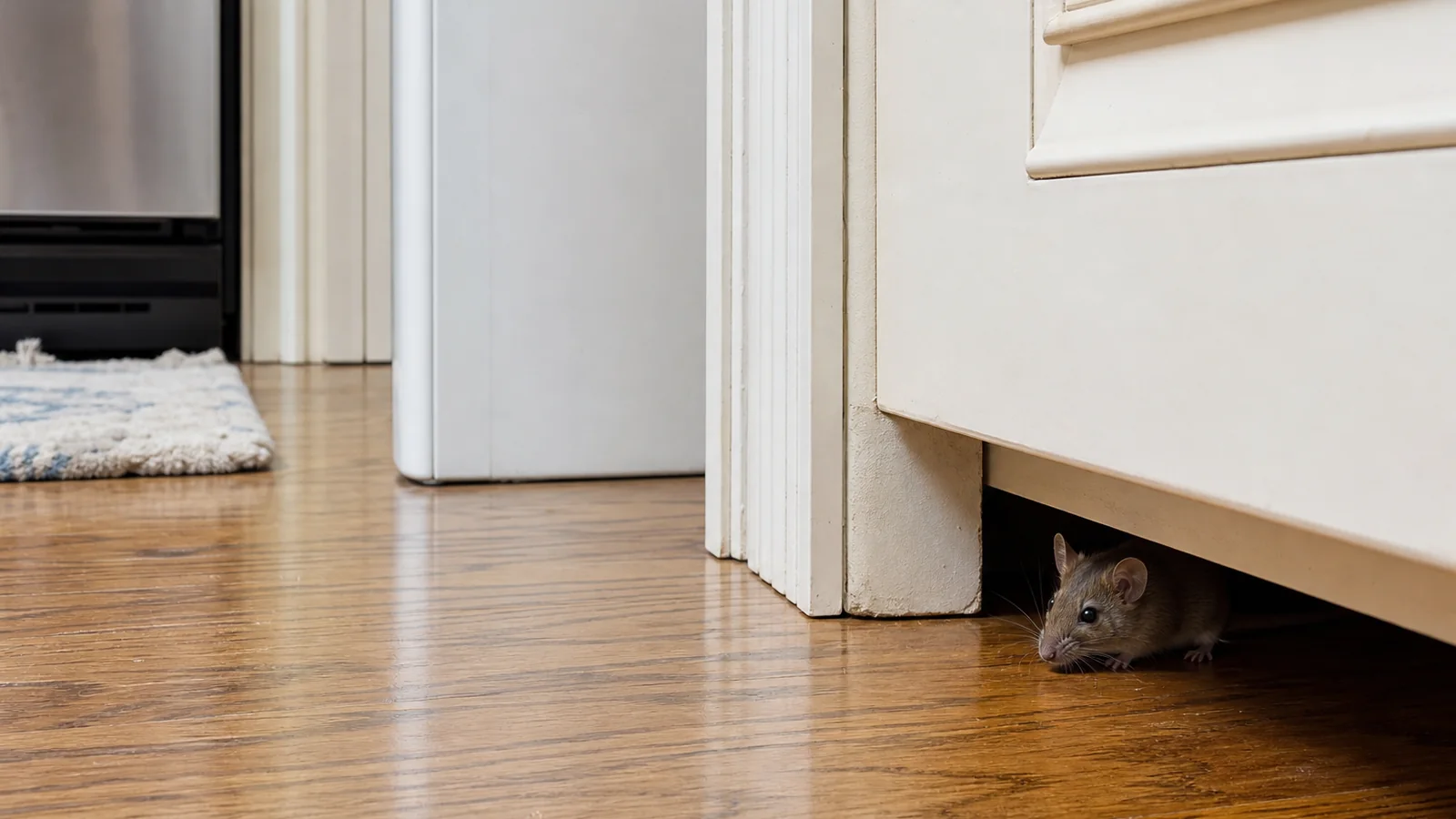
House mouse peeking from beneath a kitchen cabinet toe-kick
Illustrative kitchen scene showing the small cabinet-edge routes mice can investigate.
Follow the interior pattern

Where mouse evidence shows up first inside a home

Kitchen

Cabinet bases and appliance voids

Warmth, crumbs, water, pipe openings, and protected edges make kitchens a common place to find early evidence. Check beneath the sink, beside the range, behind the refrigerator, and along toe kicks without dismantling cabinets blindly.

Walls

Light movement in narrow cavities

Mice can use wall voids and utility paths to move between feeding and nesting areas. Sound can travel through framing, so the loudest spot is not always the nest or entry point.

Storage

Cardboard, fabric, and forgotten corners

Closets, basement shelves, pantry overflow, and boxes provide cover and nesting material. Disturbance should be documented before everything is moved.

Attic

Insulation and upper penetrations

Small gaps at roof intersections, vents, wires, or soffit transitions can matter when evidence appears above the living space. Attic signs need to be distinguished from other wildlife.

Why mice are easy to underestimate

A few droppings can point to a much larger travel network

Mice do not need a dramatic opening or a direct route across the middle of a room. They can follow cabinet backs, plumbing holes, wall-floor junctions, utility chases, garage transitions, and basement framing while remaining mostly out of sight.

That is why a mice exterminator in Cleveland should look at both the occupied room and the concealed path around it. Treating only the countertop or placing devices wherever droppings happen to be visible may miss the route that connects food, water, nesting cover, and entry.

Mouse control also requires proportion. One old dropping inside a vacant cabinet is not the same as fresh evidence appearing nightly in several rooms. Useful service begins with location, recurrence, and context.
Mice-first warning signs

Small clues that deserve close attention

Photograph evidence before cleaning and make a simple room-by-room list. Avoid dry sweeping or vacuuming droppings.

See the full signs guide
01

Small droppings in cabinets or drawers

Placement along edges, near food, or beneath plumbing can help distinguish a travel path from an isolated historic sign.

02

Shredded paper, fabric, or insulation

Soft material gathered into a sheltered spot may indicate nesting, but removal timing should follow control of active mice.

03

Fine gnaw marks on packaging

Small holes in cereal boxes, pet-food bags, seed containers, or plastic packaging show where mice have found dependable food.

04

Faint scratching after dark

Light wall or ceiling sounds are worth mapping by room and time. They do not prove the exact species or cavity location on their own.

05

Musky odor in a protected area

A recurring odor inside a cabinet, closet, or enclosed storage zone can accompany active nesting or accumulated contamination.

Inspection at mouse scale

What we look for around kitchens, walls, basements, and garages

The opening that matters may be smaller and farther from the visible evidence than expected.

Plumbing and cabinet penetrations

Openings behind sink cabinets, dishwashers, refrigerators, laundry equipment, and bathroom vanities can connect rooms to wall or floor cavities.

Door and garage transitions

Worn corner seals, gaps at thresholds, framing junctions, and wall penetrations between a garage and living space deserve close review.

Foundation and sill details

Utility entries, masonry-to-frame transitions, basement windows, and penetrations around heating, cooling, or electrical systems may provide lower-level access.

Upper building openings

Roofline intersections, soffits, vents, wires, and attic access details matter when signs begin on an upper floor.

Mice in the kitchen or walls?

Talk through the room-by-room evidence.

Tell us where droppings, sounds, or nesting material appeared.

Call (216) 541-8761
Mouse removal and control

A detailed sequence for an interior problem

Find

Confirm active zones

Use fresh evidence, room connections, food access, and timing to distinguish current activity from an old sign.

Control

Plan around occupants

Placement and methods should account for children, pets, tenants, sleeping areas, food preparation, and daily access.

Remove

Address accessible nesting concerns

Retrievable nesting material or carcasses may be handled after activity is controlled. Inaccessible voids require a separate access decision.

Seal

Close practical mouse openings

Proofing prioritizes openings that connect the exterior, garage, basement, attic, and occupied rooms.

Watch

Monitor the right indicators

New droppings, package damage, sounds, and feeding activity are more useful than assuming silence means the issue is over.

Nest removal without guesswork

A mouse nest may be accessible—or behind finished construction

Nesting material can appear in drawers, stored boxes, insulation, appliance voids, dropped ceilings, and wall cavities. If the nest is accessible, it can be evaluated after active conditions are addressed. If it is concealed, opening a wall or cabinet is not automatically the right first move.

Disturbing a suspected nest too early can spread material, erase the travel pattern, or push mice toward another protected space. Access, cleanup, and repair should be planned separately from control rather than bundled into a vague promise.

Contamination and damage

Small animals can affect food, surfaces, insulation, and stored goods

Mouse droppings and urine can contaminate protected edges and stored materials. Gnawing may damage packaging and accessible building materials. Nesting can disturb insulation, paper, fabric, and items kept in quiet spaces.

Cleanup should follow current public-health guidance. Wet-cleaning procedures, ventilation, protective equipment, and disposal depend on the area and extent. Large or inaccessible contamination may call for specialized work, while damaged wiring or building components should be evaluated by an appropriate trade.

Prepare for safe cleanup decisions →
Residential rodent control

Mice behave differently across homes and managed properties

Occupied homes

Kitchen routines, pet food, children’s rooms, basement storage, and attached garages all affect control choices. The plan should be practical to maintain without turning the home upside down.

Rental units

One unit’s cabinet evidence may connect to a shared pipe chase or basement. Management needs a way to compare reports and coordinate access while respecting unit boundaries.

Small commercial interiors

Break rooms, stock areas, deliveries, rear doors, suspended ceilings, and adjoining spaces can create different feeding and travel patterns than a house.

Mouse pressure in Cleveland buildings

Winter shelter is only part of the local picture

Cold weather can make indoor shelter attractive, but mice can remain active whenever a building provides food, water, nesting cover, and access. Cleveland homes with basements, enclosed porches, additions, attached garages, remodeled kitchens, or multiple generations of utility work may have small connected openings that are not visible from the room where signs appear.

Local inspection means reading those building layers without stereotyping an age, neighborhood, or property type. Maintenance condition matters more than a broad label.

Mouse questions

Answers for kitchen, wall, and nesting concerns

Call with your mouse signs
Why do mouse droppings keep appearing in one cabinet?

The cabinet may sit beside a plumbing opening, wall void, food source, or protected travel edge. Recurrence after appropriate cleaning is useful evidence that the route remains active.

Can mice live in walls without entering the room?

Yes. Wall and floor cavities can provide travel or nesting space, although mice usually need access to food and water somewhere. Sounds alone do not reveal the exact cavity or population.

Should I remove a mouse nest as soon as I find it?

Document it and avoid disturbing contaminated material until active mice and safe handling are considered. Removing a nest without addressing the route may not solve the problem.

Is one mouse proof that there are more?

One sighting does not establish a number. Fresh droppings, feeding damage, repeated sounds, tracks, and evidence in multiple rooms provide a better picture of scope.

How small an opening matters for mouse proofing?

Very small gaps can be relevant, but the opening’s location, surrounding material, evidence of use, and connection to the building matter as much as a generic size rule.

Can a mice exterminator help in a multi-unit building?

Yes, but shared utilities, common areas, unit access, tenant reports, and adjoining activity should be mapped so the response is not limited to one visible symptom.

Mouse signs are easier to solve when the details are fresh

Call Cleveland Rodent Fix about activity inside your home or building

Share the rooms involved, the type of evidence, and when it reappears.

Call (216) 541-8761
Call (216) 541-8761