Stored goods and packaging
Food-contact items, torn bags, cardboard, and porous goods need careful evaluation. Isolate affected materials and follow product and public-health guidance rather than shaking debris through the room.
Chewed boxes, disturbed insulation, droppings near a pipe, or a bad smell from a closed-off space should not be brushed aside. They can show where rodents are nesting or traveling.
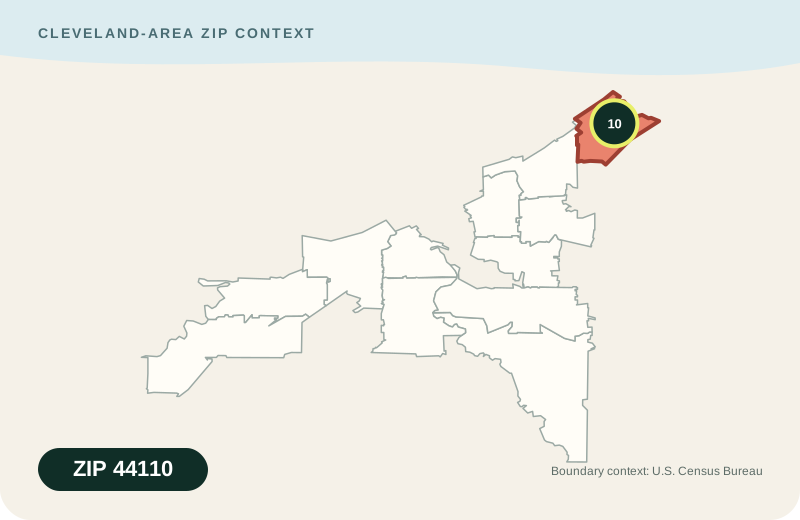
Homes near the lakefront, rail lines, commercial streets, and quiet residential blocks do not all have the same entry points. Focus on what is happening at your building.
A chewed bag in the garage matters. A worn door corner matters too. Put those clues together.
Photographs, room location, affected materials, and fresh versus older damage can help determine whether activity is isolated, ongoing, or connected to another level. Avoid sweeping or vacuuming dry droppings into the air, and keep children, pets, tenants, or staff away from affected zones until a safe cleanup plan is chosen.
A 44110 property may include finished living areas alongside basements, utility spaces, attics, back rooms, garages, or storage that receive less daily attention. Those quieter areas offer cover and can accumulate evidence before a rat or mouse is seen in an occupied room.
Damage can develop around the building systems rodents use: insulation beside a roof or wall opening, boxes along a protected edge, packaging near food, or wiring and pipe penetrations that cross between rooms. Moisture and seasonal weather can also change both the envelope and where animals seek shelter.
The safest interpretation avoids two extremes. Damage should not be dismissed as merely cosmetic, but it should not be overstated without inspection. The purpose is to identify affected materials, likely exposure, active evidence, and the access route that allowed the damage to continue.
Food-contact items, torn bags, cardboard, and porous goods need careful evaluation. Isolate affected materials and follow product and public-health guidance rather than shaking debris through the room.
Localized contamination may show the core travel or nesting zone. Removal scope depends on extent, accessibility, moisture, and whether activity is controlled.
Suspected electrical, gas, structural, or mechanical damage should be evaluated by the appropriate qualified trade. Rodent control does not substitute for technical repair.
The inspection asks what was damaged, what made that place useful, how the animal arrived, and whether the evidence continues elsewhere.
Room, height, surface, materials, freshness, and odor boundaries establish the starting point.
Storage, food, water, insulation, voids, and low traffic can explain why rodents remained.
Joists, walls, pipes, conduits, doors, and trim may carry the route toward an exterior opening.
The sequence should limit exposure and avoid sealing active animals into inaccessible space.
Larger droppings, strong staining, substantial package or material damage, and movement along lower walls may support a rat assessment. Exterior resources and larger openings deserve review.
Assess an active rat problem →Mice may shred soft material, use cabinet and wall voids, and leave small droppings in many tucked-away points. A nest does not necessarily identify the only activity area.
Understand mouse nesting evidence →Removing a damaged box or soiled insulation can improve a room while leaving the access route untouched. Exclusion should address evidence-supported openings with materials suited to the location. Door components must move; vents must breathe; roof and drainage details must shed water; utilities must remain serviceable.
After repair, monitor the original damaged zone and the transition where entry was suspected. Fresh gnawing, new droppings, disturbed material, or renewed odor means the plan needs to be reassessed rather than simply cleaned again.
Coordinate removal and cleanup concernsNot automatically. Material, direct contamination, damage, cleanability, and intended use matter. Isolate the zone and use appropriate health guidance for handling and disposal decisions.
Dry sweeping or vacuuming can disturb contaminated dust. Avoid it and follow current public-health cleanup guidance or seek qualified help for extensive or inaccessible contamination.
No, but suspected electrical damage should not be guessed at. Keep people away from an unsafe area and have the relevant system evaluated by a qualified professional.
Odor may come from hidden contamination, a nest, urine, moisture, or a dead animal in a void. Locating the odor boundary and nearby routes is more useful than masking it.
Usually the sequence should account for active animals and entry points first. Otherwise new material can be contaminated again or removal can disturb a route without resolving it.
Suspected electrical or gas damage, extensive contamination, activity in food-contact areas, or exposure affecting vulnerable occupants deserves prompt, appropriately qualified attention.
Tell us what was affected, where it was found, and whether new signs are appearing.
Call Cleveland Rodent Fix at (216) 541-8761