Fresh versus historical evidence
We compare where pellets return, where gnawing is fresh, and whether noise or sightings follow a repeatable schedule.
Goal: determine whether signs form one cluster or several connected zones.If sightings, droppings, or gnawing keep coming back, there is usually more to address than the animal you saw. Look at where activity is strongest, what is attracting it, and how rodents are getting in.
A rodent seen crossing a room is a moment. Droppings in protected areas, damaged packages, nesting material, tracks, odor, and recurring sound show how the building is being used.
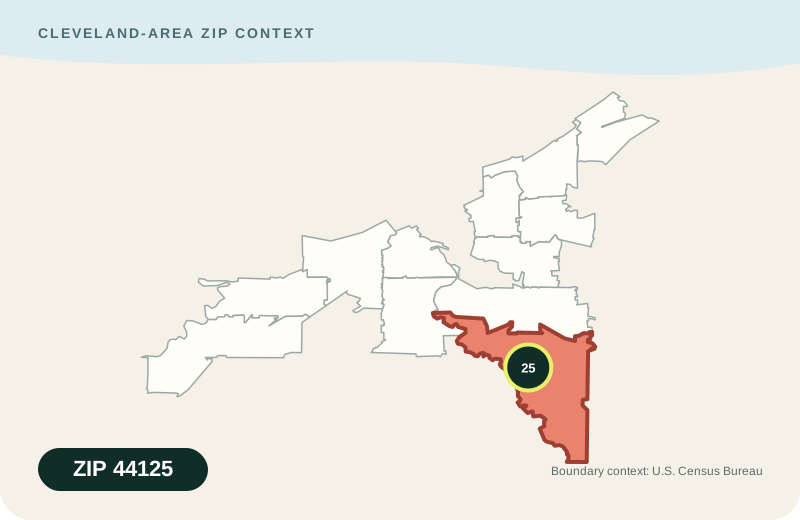
Properties in the 44125 area can combine homes, rentals, garages, outbuildings, commercial edges, landscaped areas, utility corridors, and storage. Foundation lines, exterior doors, penetrations, lower windows, and transitions between masonry and framing may provide access when gaps or components deteriorate.
This page does not assume the vertical basement-to-attic pattern used elsewhere on the site. The emphasis here is the active zone: where fresh signs accumulate, what resources are present, whether exterior activity approaches the structure, and how rodents move between storage, utility, food, and occupied rooms.
Weather matters because shelter and food pressure change across seasons, while moisture and freeze-thaw movement can alter lower building materials. Still, season alone does not identify the route. Fresh evidence at the specific property must lead the plan.
The investigation moves from activity to species, route, and response.
We compare where pellets return, where gnawing is fresh, and whether noise or sightings follow a repeatable schedule.
Goal: determine whether signs form one cluster or several connected zones.No single clue is treated as infallible. The pattern supports a rat-focused, mouse-focused, or broader rodent plan.
Goal: choose controls and repairs that fit the likely animal.Foundation edges, doors, utilities, storage, food, waste, water, and cover are evaluated together.
Goal: remove what sustains activity while access is corrected.Warm equipment, water, drains, pipes, and wall penetrations can support travel. Inspect behind appliances safely and avoid disturbing electrical or gas systems.
Fine package damage can suggest mice; heavier gnawing may raise rat concerns. Check the wall edge and route into the room, not only the affected bag.
Doors, wall penetrations, seed, pet food, fabrics, and seasonal goods provide access and cover. Evidence here can remain separate or place pressure on the residence.
Burrows, rub marks, tracks, gaps, vegetation, and sheltered edges may help explain rat activity. Do not treat an outdoor hole as proof of the complete indoor route.
Protect occupants, document evidence, secure attractive materials, and avoid scattering contaminated dust or nest debris.
Placement and method should reflect the likely animal, travel edges, access restrictions, children, pets, tenants, and business operations.
Close supported routes in sequence, monitor activity, and reassess if evidence shifts rather than declaring success from one quiet interval.
A lower opening may be only one part of the path. Door alignment, foundation joints, utility penetrations, siding and trim transitions, vents, and roof edges should be compared with indoor evidence. Active control must be coordinated so animals are not trapped within the structure.
Repair choices depend on substrate, movement, weather, drainage, ventilation, and service access. Structural, electrical, roofing, masonry, or major door work may require the relevant qualified professional. After closure, recheck both the repaired edge and the rooms where signs were freshest.
Explore long-term rodent proofingNot by itself. The sighting is important, but droppings, gnawing, tracks, burrows, repeat timing, and entry evidence help define the scale.
More animals may remain, new animals may enter, or food and cover may still support activity. Removal needs monitoring and access correction.
It may support nearby rodents, but the actual route into the house still needs evidence. Inspect both structures and the travel area between them.
No. Rank openings by evidence and coordinate primary closure with active control. Some gaps serve drainage or building functions and need appropriate repair.
Photograph the separate locations and avoid assumptions. Different ages, species, or misidentified material are possible; a broader inspection can clarify the pattern.
Collect exact reports from occupants, provide authorized access to affected and shared areas, document prior control or repairs, and avoid erasing all evidence beforehand.
Share the freshest evidence, affected zones, and what has already been tried.
Talk with Cleveland Rodent Fix · (216) 541-8761