Rat activity near foundations, waste, and garages
Rats may use stronger exterior travel lines and leave larger evidence. Weak filler, loose vents, and door edges may not withstand repeat pressure.
Rodent signs on more than one floor do not always mean separate problems. Rats or mice may be moving from a basement or garage into walls, ceilings, or the attic.
Either one works. What matters next is whether the signs started outside, in the basement, by a garage, or higher in the house.
A simple note like “we hear it behind the pantry wall after dark” is exactly the kind of detail we need.
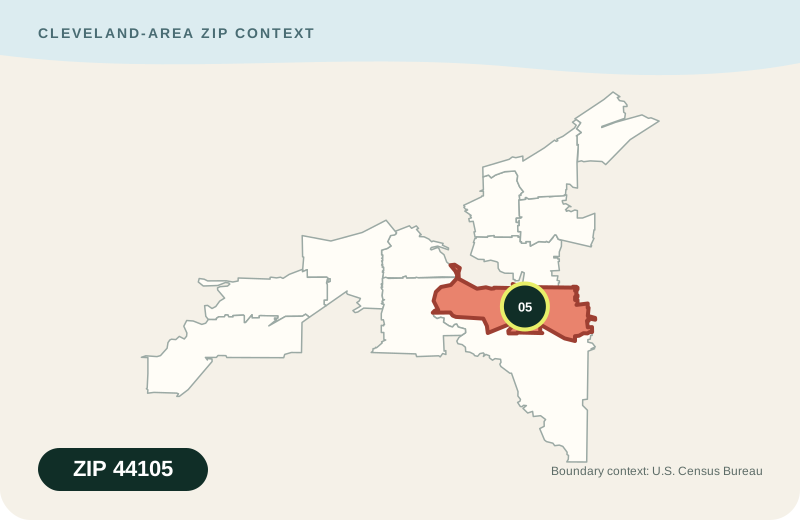
A 44105 property may include a masonry basement, framed living levels, an enclosed porch or addition, garage or rear service area, and an attic beneath a roofline with several transitions. Utilities can pass through all of those zones.
That layering gives rats or mice more than one way to move out of sight. Lower-level access can lead into a wall chase. A chase can reach a kitchen, bathroom, or ceiling. An attic opening can create a separate upper route—or connect with activity below.
Larger droppings, strong gnawing, rub marks, or exterior burrows increase rat concern. Small droppings near pipes, stored goods, or the ceiling below a kitchen may point toward mice.
Inspect foundation transitions, window wells, service penetrations, doors, attached walls, floor drains, leaks, pet food, seed, and waste conditions.
Use the rat-control guide for substantial lower-level signs →Droppings on joists, compressed insulation, nesting material, odor, or movement above a room may connect to vents, soffits, utility lines, additions, or open wall paths.
Attics add fall, electrical, heat, and contamination risk. Inspect from a safe position and do not dry vacuum droppings.
Open the attic-droppings guide →The order helps test whether signs on separate levels belong to one route.
Foundation joints, utility entries, doors, vegetation, stored items, waste, and protected travel.
Droppings, tracks, gnawing, food, water, ceiling openings, and vertical chases.
Pipe penetrations, cabinet voids, appliance edges, baseboards, and sound location.
Material transitions, door corners, attached walls, roof changes, and stored resources.
Insulation trails, joist evidence, nests, vents, soffits, eaves, and intersecting roofs.
Rats may use stronger exterior travel lines and leave larger evidence. Weak filler, loose vents, and door edges may not withstand repeat pressure.
Small openings around plumbing and utilities can connect lower levels to food and nesting cover.
Rodent evidence above may involve an exterior upper opening, a vertical interior chase, or both. Identification should remain evidence-led.
Proofing should be coordinated with active control. Then closures can be prioritized by evidence, material, access, and the job the opening performs.
Use details compatible with masonry, pipes, conduits, weather, and future service access.
Address alignment, corners, sweeps, thresholds, and repeated movement rather than applying a static patch.
Inspect where materials, framing, roofs, and foundations meet.
Maintain ventilation, drainage, and weather performance; route major roof defects to the right trade.
Reduce concealed movement while recognizing that an interior closure is not the exterior solution.
Multi-level signs make route mapping more important before walls, ceilings, or roof details are opened or sealed.
Children, pets, bedrooms, food areas, basement storage, and safe attic access influence how control and inspection are planned. Avoid moving contaminated material through occupied rooms without a cleanup path.
Unit reports, common basements, service rooms, rear entries, stock, waste, and roof access may involve different occupants and contractors. Document who can enter each zone and who owns the follow-up.
Review managed-property FAQs →Droppings in the attic may sit above a wall route. Gnawing in the basement may connect to utilities. Nesting material in a storage area may be separate from insulation contamination above.
Document each affected material and location. Active control, cleanup, insulation removal, wiring inspection, wall access, and exterior repair should be assigned deliberately rather than treated as one undefined task.
Use the material-by-material damage guide →Connected wall cavities, plumbing, utility chases, and open framing can provide vertical travel, but evidence on each level is needed to confirm one route.
No. Rodents may enter at the roofline or travel upward from a lower opening. Compare eave evidence with wall and basement signs.
Yes when it connects to affected rooms or contains material transitions, storage, food, or signs. Its current condition matters more than the label.
An attached wall, vertical chase, addition, or roof transition can connect them. Track physical evidence rather than assuming.
Prioritize high-confidence openings in coordination with active control. Closing a primary route too soon can trap or redirect rodents.
When contaminated insulation, inaccessible material, extensive droppings, wiring, ducts, or unsafe access require specialized planning beyond rodent control.
Call with the levels involved, the evidence at each one, and any recent repair or construction.
Call (216) 541-8761