Droppings return beneath the same plumbing opening
This can suggest an active cabinet-to-wall connection rather than random room activity.
Droppings under the sink, scratching in a wall, or a chewed food package may all point to the same problem. Start with the freshest sign and the room where it showed up.
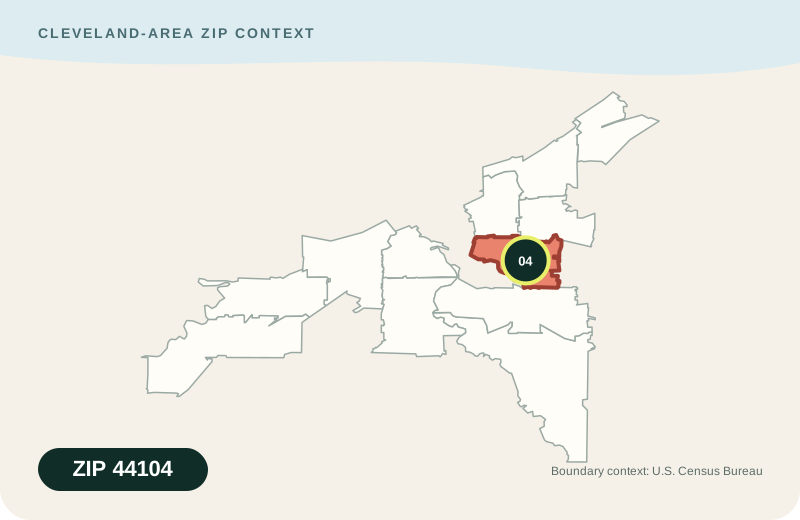
A kitchen or pantry may be the first place someone notices rodents because the room concentrates food, water, warmth, and plumbing openings. That does not mean the exterior entry is beside the cabinet. In a 44104 property, the route may continue through a wall cavity, basement ceiling, porch connection, utility chase, or adjoining unit before it reaches outside.
Document the location and recurrence before cleanup removes the pattern. Avoid dry sweeping or vacuuming droppings.
This can suggest an active cabinet-to-wall connection rather than random room activity.
Timing and direction help, but sound needs physical evidence before a cavity is opened.
Chewing plus shredded material can connect feeding and nesting behavior.
Vertical alignment with pipes or chases can focus the inspection.
Shared walls, ceilings, or utilities may make a coordinated review more useful.
The inspection should move from evidence to route, not from a generic checklist to a conclusion.
Sink bases, toe kicks, ranges, refrigerators, laundry equipment, and water heaters can hide openings, heat, water, and food fragments.
Pipe chases, open framing, suspended ceilings, soffits, and utility runs can carry movement past the room where it is first noticed.
Service entries, foundation transitions, stored goods, and the ceiling below a kitchen or bathroom can reveal the lower connection.
Doors, vents, utility penetrations, porches, additions, waste, and neighboring attached space can influence pressure on the building.
Droppings on a hard basement floor, contamination inside a cabinet, nesting in a box, and soiled insulation do not have the same cleanup path. Keep people and pets away, avoid dry sweeping or vacuuming, and follow current public-health guidance.
Food packaging with gnawing or contamination should be handled under food-safety guidance. Wiring, ducts, insulation, finishes, and structural materials may need evaluation by the appropriate trade.
Understand damage and material risksConsider wet-cleaning guidance, area size, and whether fresh signs continue.
Assess contamination, value, access, and whether safe isolation is possible.
Do not open a wall simply to search. Narrow the location and plan repair first.
Air movement may shift the smell. Use a location hypothesis before access.
Read the dead rodent guide →The most visible gap is not always the active route. Rank openings by evidence of use, connection to the affected room, material condition, accessibility, and building function.
In an occupied home, the priority may be protecting food areas, children, pets, and daily routines while tracing the route.
Homeowner lens
In a rental or small apartment property, reports should be compared across units and shared services before one cabinet is treated as the whole problem.
Property-manager lens
In a small commercial space, rear doors, stock, waste, deliveries, and adjoining occupancy belong in the inspection record.
Commercial lens
Share the exact room, nearby plumbing or utilities, and whether evidence returns.
The cabinet may connect to a wall or floor route through plumbing openings. Recurrence suggests the pathway or active mice still need attention.
Not as a first step. Inspect accessible toe kicks, plumbing, adjoining rooms, and lower levels before dismantling fixed finishes.
Yes. Pipes, chases, and open framing can carry movement and sound upward. Compare the wall alignment with evidence below.
Isolate exposed items and follow applicable food-safety guidance. Packaging with gnawing or contamination may need disposal.
No. Cleaning addresses affected material; active rodents and entry routes require separate control and proofing decisions.
When the likely source can be narrowed and access benefits outweigh damage and risk. Odor alone can travel too far to guide random cutting.
Describe the droppings, sounds, damage, or nesting and where they appear.
Call (216) 541-8761